Wedding Planner Contract Template

Use our wedding planner contract template to formalize agreements and protect both parties in client relationships. Customize roles, payment terms, event details, and vendor coordination.
Available in English only.
star iconstar iconstar iconstar iconstar icon
1020+ Reviews
Bonsai has helped create 1,023,928 documents and counting.

Over 10,000 businesses rely on Bonsai to streamline their operations.

star iconstar iconstar iconstar iconstar icon
1,020+ reviews
Design
Consutling
Marketing
Design
Marketing
Consulting
Videography
Software Development
Design
Consulting
Marketing
Design
Marketing
  
Consulting
  
Videography
  
Software Development
  

Die Planung einer Hochzeit ist eine große Verantwortung. Ein Hochzeitsplaner muss dafür sorgen, dass alles reibungslos verläuft.

Und obwohl die Aufgaben, Rollen und Erwartungen eines Hochzeitsplaners von Kunde zu Kunde variieren, ist es wichtig, diese Rollen und Aufgaben im Voraus genau zu definieren, damit Sie sich nicht in letzter Minute mit negativen Situationen auseinandersetzen müssen.

Und genau hier kann ein Hochzeitsplaner-Vertrag helfen. Dieser Vertrag enthält alle Erwartungen und dokumentiert alles, damit es im weiteren Verlauf Ihrer Veranstaltung zu keinen Unstimmigkeiten kommt.

Auch wenn die Erwartungen jedes Hochzeitsplaners unterschiedlich sind, gibt Ihnen dieser Artikel eine gute Vorstellung davon, was Sie in den Vertrag aufnehmen sollten. Wir werden auch darüber sprechen, wie Sie unsere kostenlosen Vorlagen für Hochzeitsplaner an Ihre Bedürfnisse anpassen können.

Fangen wir an!

Was ist ein Hochzeitsplaner-Vertrag?

Ein Raum mit Tischen und StühlenBeschreibung automatisch generiert
Hochzeitsfeier

Hochzeitsplaner haben die unglaublich stressige Aufgabe, eine Hochzeitsfeier zu planen und zu organisieren. Sie erwecken eine Hochzeit zum Leben und sorgen dafür, dass alles nach Plan verläuft. Und dafür nutzen sie Verträge für Hochzeitsplaner. Ein guter Hochzeitsplanervertrag ist auf personalisierte Dienstleistungen zugeschnitten. In der Regel werden in einem Vertrag die Verantwortlichkeiten beider beteiligten Parteien festgelegt.

Der Vertrag legt die Verantwortlichkeiten beider Parteien fest und gewährleistet so eine reibungslose und gut koordinierte Feier. Es definiert den Umfang der Dienstleistungen und behandelt potenzielle Streitigkeiten fair und objektiv.

Ein Hochzeitsplanervertrag ist eine wichtige, formelle und rechtsverbindliche Vereinbarung zwischen Ihnen und Ihrem Kunden. Die Hochzeitsfeierlichkeiten basieren auf einer Reihe von Bedingungen, die Ihr Kunde oder Hochzeitsplaner vorgibt.

Eine solche Vereinbarung verpflichtet beide Parteien dazu, das perfekte Hochzeitserlebnis zu gestalten. Die Dauer Ihrer Hochzeit hat keinen Einfluss auf den Vertrag. Die Bedingungen bleiben dieselben, egal ob es sich um eine kleine Hochzeit, eine eintägige oder eine einwöchige Hochzeit handelt.

Vorteile der Verwendung einer Vertragsvorlage für einen Hochzeitsplaner

Ein professioneller Hochzeitsvertrag legt die genaue Rolle des Hochzeitsplaners, die Bedingungen beider Parteien, den Zahlungsprozess und vieles mehr fest. Seine Hauptaufgabe besteht darin, Rechtssicherheit in Bezug auf alle im Vertrag genannten Klauseln zu bieten. Zweitens sorgt es für klare Bedingungen für alle Aspekte der Hochzeitsplanung und lässt keinen Raum für Unklarheiten.

Wenn Sie eine vorgefertigte Vorlage verwenden, können Sie alle Anforderungen an einem Ort zusammenfassen, ohne wichtige Klauseln auszulassen. Sie können diese Vorlagen auch ganz einfach bearbeiten, ohne andere Klauseln in der Vereinbarung zu beeinträchtigen.

Die Vereinbarung gilt für einen bestimmten Zeitraum gemäß den vereinbarten Bedingungen. Es kann je nach sich ändernden Bedürfnissen und Umständen angepasst werden. Der Vertrag legt auch die Erwartungen für beide Parteien fest, einschließlich der Vertraulichkeitsbedingungen zum Schutz Ihrer Privatsphäre.

Und das ist noch nicht alles. Hier sind einige weitere Gründe, warum Sie eine Vertragsvorlage für einen Hochzeitsplaner verwenden sollten:

1. Schutz für beide Parteien

Wie jeder andere Job ist auch die Planung einer Hochzeit eine Aufgabe. Daher ist es notwendig, diese Rolle mit einer professionellen Einstellung anzugehen. Ein Vertrag legt die Verantwortlichkeiten beider Parteien fest und schützt beide Parteien im Falle von Problemen.

2. Setzt klare Erwartungen

Zu den Aufgaben eines Hochzeitsplaners können gehören:

  • Buchung des Veranstaltungsortes und des Fotografen
  • Organisation des Transports für Gäste
  • Planung der Sitzordnung
  • Planung ihrer Arbeitszeiten
  • Organisation von Verpflegung und Unterkunft.

Ein effektives Gästemanagement und die Nachverfolgung von RSVPs sind für eine stressfreie Hochzeitsfeier unerlässlich, damit die Sitzordnung, das Catering und andere logistische Details perfekt auf die erwartete Anzahl der Gäste abgestimmt sind.

Wenn Sie all diese Punkte im Vertrag erwähnen, kann dies der anderen Partei helfen, ihre Rolle und Ihre Erwartungen besser zu verstehen. Je mehr Details Sie in den Vertrag aufnehmen, desto besser.

3. Löst Zahlungsprobleme

Hochzeitsplaner müssen wissen, wie viele Stunden sie arbeiten werden. Der Vertrag sollte also ihre genauen Arbeitszeiten enthalten. Außerdem sollte darin angegeben werden, ob der Hochzeitsplaner bei der Hochzeit anwesend sein wird oder nicht.

Zusammenfassend sollte ein typischer Vertrag also Folgendes enthalten:

  • Zahlungstermine
  • Arbeitszeiten
  • Stornierungsgebühren
  • Rückerstattungsbetrag (falls vorhanden).

Sie können Ihrem Vertrag auch eine Rechnungsvorlage beifügen, wenn Sie davon ausgehen, dass Ihr Hochzeitsplaner Überstunden macht oder als Auftragnehmer tätig ist. Das Dokument enthält in der Regel Zahlungsdetails für transparente finanzielle Vereinbarungen.

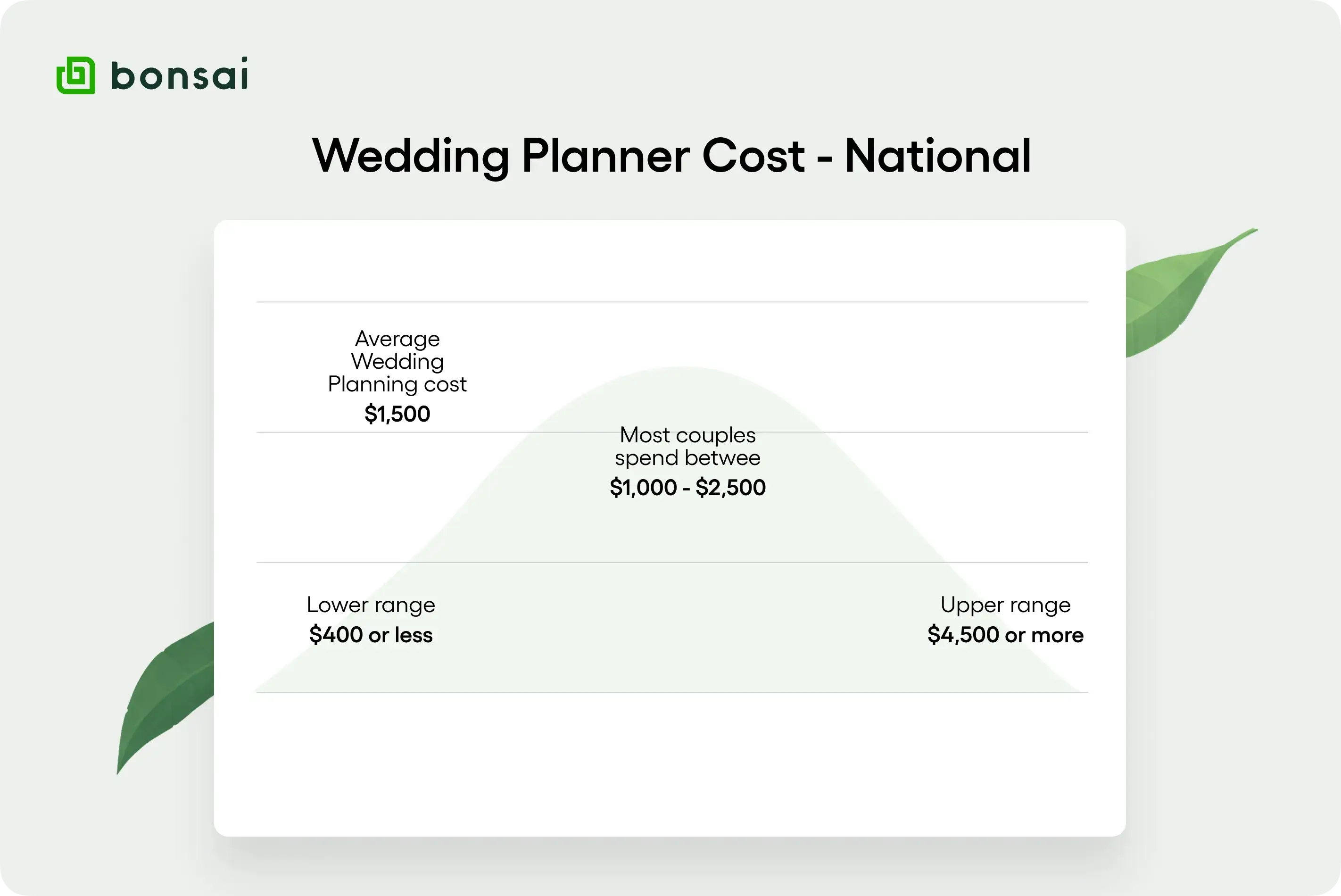
Hochzeitsplaner Kosten

Verwendung einer Vorlage für einen Hochzeitsplaner-Vertrag

Eine Gruppe von Blumen auf StühlenBeschreibung automatisch generiert

Sehen wir uns einmal an, wie man eine Vorlage für einen Hochzeitsplaner-Vertrag verwendet.

1. Lieferantenvereinbarungen bestätigen

Alle Anbieter sollten im Vertrag dokumentiert werden. Das bedeutet, dass Informationen wie die folgenden enthalten sein müssen:

  • Die bestätigten Termine für die Veranstaltung
  • Die genauen Orte für die Veranstaltungen und die erforderlichen Hochzeitsartikel
  • Die Lieferzeiten der Lieferanten.

Außerdem sollte der Vertrag bestätigen, dass die Zahlungen für alle Artikel pünktlich erfolgen und dass alle relevanten Voraus- oder Ratenzahlungen beglichen werden.

2. Detaillierte Hochzeitsgestaltung und Themenplanung

Die Dekoration und die thematische Abstimmung sind zentrale Aspekte einer gut geplanten Hochzeit. Sie sorgen dafür, dass alle Elemente harmonisch auf das gewählte Thema abgestimmt sind und eine optisch beeindruckende und stimmige Atmosphäre schaffen.

Im Rahmen des Hochzeitsplanervertrags ist es die Aufgabe des Hochzeitsplaners, alles mit dem Paar und allen Beteiligten zu koordinieren. Das bedeutet, dass die Farbpaletten, Ideen, Blumenarrangements, Musiker und das Catering von ihnen entschieden werden sollten.

Planer können damit beginnen, das Paar zu befragen und herauszufinden, was sie sich für ihre Traumhochzeit wünschen. Sobald sie ihre Recherchen abgeschlossen haben, sollten sie alles in ihrer Vertragsvorlage notieren.

3. Adressänderungen und Last-Minute-Anfragen

Der Vertrag sollte auch ein Verfahren festlegen, um kurzfristige Änderungen zu behandeln und diese reibungslos zu berücksichtigen.

Darüber hinaus sollten die Richtlinien für die Umsetzung dieser Änderungen festgelegt und klar kommuniziert werden, ob für kurzfristige Anfragen zusätzliche Gebühren anfallen.

4. Umgang mit Stornierungen oder Verschiebungen

Der Vertrag sollte den Ablauf für die Verschiebung oder vollständige Absage der Hochzeit detailliert beschreiben und die in solchen Fällen anfallenden Gebühren oder Strafen klar darlegen. Die neuen Termine und die Verfügbarkeit sollten ebenfalls im Vertrag angegeben werden.

Außerdem wird der Vertrag die Umverteilung bereits geleisteter Zahlungen in einem solchen Fall regeln. Um sicherzustellen, dass Ihr Hochzeitsplaner-Vertrag alle notwendigen Klauseln enthält, sehen Sie sich unsere kostenlose Planer-Vorlage an.

Was sollte in einem Hochzeitsplaner-Vertrag enthalten sein?

Eine schriftliche Zusage stellt sicher, dass Sie über ordnungsgemäße Unterlagen verfügen. Ein Standardvertrag für die Hochzeitsplanung enthält Stornierungsbedingungen für unvorhergesehene Umstände.

Hier sind einige Punkte, die Sie in einem Vertrag mit einem Hochzeitsplaner unbedingt berücksichtigen sollten:

1. Zweck des Vertrags

Stellen Sie sicher, dass der Zweck des Vertrags darin besteht, die neue Beziehung zu formalisieren und die verschiedenen rechtlichen Verpflichtungen zu skizzieren, die beide Parteien einander gegenüber haben. Es sollte die Art dieser Verpflichtungen und die Maßnahmen, die beide Seiten ergreifen können, wenn die Verpflichtungen nicht erfüllt werden, umreißen.

2. Detaillierte Kundeninformationen

Der Vertrag sollte einen detaillierten Abschnitt enthalten, in dem die Informationen des Kunden aufgeführt sind. Dazu gehören:

  • Die Namen des Paares
  • E-Mail-Adressen
  • Privatadressen
  • Telefonnummern
  • Alle weiteren erforderlichen Informationen.

3. Umfassendes Leistungsspektrum

Ein Hochzeitsplaner-Vertrag sollte die Aufgaben des Hochzeitsplaners, die von ihm erwarteten Leistungen, seine Aufgaben, die Art und Weise, wie er die Hochzeit organisiert, und die Bezugsquellen für die Materialien umfassen.

Jede Dienstleistung sollte in kleinere Kategorien unterteilt werden, deren jeweilige Kosten im Vertrag dokumentiert sind.

4. Zahlungsstruktur und Zahlungsplan

Der nächste zu berücksichtigende Punkt ist die Zahlungsstruktur. Die Struktur sollte Folgendes umfassen:

  • Die erforderlichen Vorauszahlungen und die Art der Zahlungsüberweisung
  • Die nicht erstattungsfähigen Zahlungen für verschiedene Dienstleistungen
  • Eine Aufschlüsselung aller Kosten und das geschätzte Budget.

5. Datum, Uhrzeit und Ort der Veranstaltung

Im Ehevertrag sollten Sie auch Folgendes besprechen:

  • Veranstaltungsort, dessen Adresse und die Anzahl der Gäste, die dort untergebracht werden können.
  • Zeitpunkt der Zeremonie, des Empfangs und eventueller Probeessen.
  • Ort, an dem die Zeremonie und der Empfang stattfinden werden (falls diese an unterschiedlichen Orten stattfinden).

Proben sind für die Vorbereitung der Hochzeitsgesellschaft auf den großen Tag von entscheidender Bedeutung, damit sich alle mit dem Ablauf der Zeremonie vertraut machen können und ein reibungsloser und souveräner Gang zum Altar gewährleistet ist.

Überprüfen Sie alle diese Angaben noch einmal sorgfältig, denn schon eine kleine Änderung der Adresse kann Ihre Pläne durcheinanderbringen.

6. Lieferantenkoordination und -management

Ein Vertrag mit einem Hochzeitsplaner sollte Einzelheiten darüber enthalten, wie der Planer die Zusammenarbeit mit den Lieferanten koordinieren wird. Dies ist jedoch eine variable Klausel, da der Kunde wählen kann, ob er die Lieferanten selbstständig betreuen und mit ihnen koordinieren möchte oder ob er den Planer damit beauftragt.

In jedem Fall ist es wichtig, zu klären, wer dafür verantwortlich ist, um Verwirrung und mögliche Auseinandersetzungen in letzter Minute zu vermeiden.

7. Aufgaben und Pflichten des Hochzeitsplaners

Schließlich sollten alle Aufgaben und Pflichten des Hochzeitsplaners im Vertrag klar aufgeführt sein.

Der Kunde sollte sich darüber im Klaren sein, was er vom Hochzeitsplaner erwartet, und der Planer sollte die Freiheit haben, diesen Erwartungen und Wünschen vor Vertragsunterzeichnung zuzustimmen oder sie abzulehnen.

Arten von Verträgen für Hochzeitsplaner

Ein Tisch mit rosa Blumen und ServiettenBeschreibung automatisch generiert
Hochzeitsblumen Bild

Hier sind einige Arten von Verträgen für Hochzeitsplaner, mit denen Sie je nach den angebotenen Dienstleistungen beginnen können:

1. Vertrag über die komplette Hochzeitsplanung

Ein Full-Service-Hochzeitsplanungsvertrag bedeutet, dass der Hochzeitsplan alles umfasst. Von der Koordination mit den Anbietern bis zur Organisation der Unterbringung der Gäste. Dieser Vertrag sollte Folgendes enthalten:

  • Strukturierte Zahlungen und die entsprechenden Fristen
  • Die Einzelheiten aller im Rahmen des Vertrags angebotenen Dienstleistungen
  • Die Dauer der Hochzeit
  • Alle weiteren Aufgaben für den Hochzeitsplaner.

2. Vertrag über die Koordination am Tag der Veranstaltung

Dieser Vertrag enthält Klauseln für den Hochzeitstag selbst. Es sollte alle Details, den Zeitplan und die vom Planer zu verwaltenden Aufgaben festlegen und eine genaue Aufschlüsselung aller Dienstleistungen und der jeweiligen Gebühren für jede Dienstleistung enthalten.

3. Beratungsvertrag

Ein reiner Beratungsvertrag bietet Beratungsleistungen ohne direkte Beteiligung. Das bedeutet, dem Paar einige Ideen zu geben, Moodboards für sie zu entwerfen und ihnen bei der Auswahl der Lieferanten, den Blumenarrangements und der Planung des großen Tages mit Rat und Tat zur Seite zu stehen.

4, Vertrag über die Planung einer Hochzeit am Reiseziel

Eine Vertragsvorlage für Hochzeitsplaner vereinfacht die Planung von Hochzeiten und gewährleistet die Zusammenarbeit mit den Kunden. Es geht um Folgendes:

  • Geschäftszeiten – In dieser Klausel legen Sie fest, wann Sie für Kunden erreichbar sind, damit diese wissen, wann sie Sie kontaktieren können.
  • Kommunikationskanäle – Hier geben Sie an, wie der Kontakt aufrechterhalten werden soll, d. h. per E-Mail, Telefon oder beides.
  • Besprechungstermine – Hier geben Sie an, wie viel Zeit Sie für die Planung einer Besprechung mit den Kunden benötigen, um Last-Minute-Anfragen zu vermeiden.
  • Zeitplan – Diese Klausel legt fest, wann die Hochzeitsplanung beginnt und wann sie endet.
  • Zahlungen – Diese Klausel legt die Erwartungen hinsichtlich der Zahlungen fest und regelt, was geschieht, wenn die Zahlung nicht rechtzeitig erfolgt.

Tipps für einen professionellen Hochzeitsplanungsvertrag

Ein Tisch mit Essen darauf Beschreibung automatisch generiert
Hochzeitsbankett

Hier sind einige Tipps, die Ihnen dabei helfen, Ihren ganz persönlichen professionellen Hochzeitsplanungsvertrag zu erstellen:

1. Beginnen Sie mit einem klaren Titel und einer klaren Einleitung.

Stellen Sie sicher, dass Ihr Hochzeitsplaner-Vertrag einen klaren Titel und eine klare Einleitung hat. Diese sollten widerspiegeln, worüber Sie im Vertrag sprechen werden.

2. Verwenden Sie eine klare, prägnante und einfache Sprache.

Sie sollten in dem Vertrag keine Fachsprache verwenden. Seien Sie so klar und deutlich wie möglich, damit für die andere Partei nichts verwirrend ist.

Vermeiden Sie außerdem Metaphern oder Ausdrücke, die nicht leicht verständlich sind. Denken Sie daran, dass Sie keinen Unternehmensvertrag unterzeichnen, sondern einen Ehevertrag, der daher so einfach wie möglich sein sollte.

Stellen Sie außerdem sicher, dass Ihr Vertrag eine umfassende Anleitung enthält, in der jeder Abschnitt in leicht verständlicher Sprache erklärt wird. Dadurch wissen alle Beteiligten, worum es in dem Vertrag geht.

3. Zahlungsbedingungen und -pläne festlegen

Legen Sie klare Fristen für die erwartete Zahlung fest. Sie sollten auch ein Treffen zu diesen Klauseln vereinbaren und alles klären, was in Zukunft zu rechtlichen Problemen führen könnte, beispielsweise die Frage, wem die geistigen Eigentumsrechte an den Hochzeitsideen gehören.

4. Beschreiben Sie den Arbeitsumfang im Detail

Ein Vertrag sollte den Arbeitsumfang detailliert aufführen, beispielsweise die zu erbringenden Leistungen im Zusammenhang mit der Hochzeit, den Zeitplan und relevante Informationen zur Strukturierung der einzelnen Aufgaben. Dies hilft allen Beteiligten, ihre Verantwortlichkeiten zu verstehen.

5. Adressstornierungen und Rückerstattungen

Klauseln für Stornierungen und Rückerstattungen sollten in einem Vertrag enthalten sein. Sie sehen so aus:

  • Bei Stornierung des Dienstes einen Monat vor der Veranstaltung wird eine Rückerstattung in Höhe von 25 % gewährt.
  • Bei einer Stornierung zwei Monate vor der Veranstaltung wird eine Rückerstattung in Höhe von 50 % gewährt.
  • Bei einer Stornierung drei Monate vor der Veranstaltung wird eine Rückerstattung in Höhe von 75 % gewährt.

Sie können diesen Abschnitt entsprechend Ihren Tarifen und Richtlinien strukturieren. Außerdem empfiehlt es sich, so viele Klauseln wie möglich zu Stornierungen und Rückerstattungen aufzunehmen, damit beide Parteien wissen, was passiert, wenn sie Dienstleistungen stornieren müssen.

6. Haftungs- und Versicherungsklauseln hervorheben

Haftpflichtversicherungsklauseln bieten Schutz vor Ansprüchen aufgrund von Schäden oder Verletzungen anderer Personen oder Sachschäden. Die Versicherung deckt alle Rechtskosten und Auszahlungen, für die der Versicherte während seiner Arbeit verantwortlich ist.

Wichtige Erkenntnisse

Die Hochzeitsplanung kann ohne Vertrag zum Albtraum werden. Glücklicherweise kann Ihnen die kostenlose Vertragsvorlage für Hochzeitsplaner von Bonsai dabei helfen, Ihre Prioritäten zu verstehen und diese ohne Verwirrung umzusetzen.

Die Vorlage ist sehr umfassend. Es behandelt alles, was Sie in einen professionellen Hochzeitsplaner-Vertrag aufnehmen müssen, und hilft Ihnen sogar dabei, zu verstehen, welche Änderungen Sie vornehmen müssen, um ihn an Ihre Situation anzupassen.

Häufig gestellte Fragen

Kann ich die Vorlage für den Hochzeitsplaner-Vertrag an meine speziellen Bedürfnisse anpassen?

Ja, Sie können eine Vorlage für einen Hochzeitsplaner-Vertrag ganz einfach bearbeiten, ohne die anderen Abschnitte zu beeinträchtigen.

Wie gehe ich mit Änderungen oder Modifikationen um, nachdem der Vertrag unterzeichnet wurde?

Diese Klausel sollte in den Vertrag aufgenommen werden und besagen, dass alle Änderungen oder Modifikationen, sofern sie akzeptabel sind, nach Vertragsunterzeichnung berücksichtigt werden sollten.

Ist ein Vertrag mit einem Hochzeitsplaner rechtsverbindlich?

Ja, der kostenlose Hochzeitsplaner von Bonsai wird von Anwälten geprüft und ist rechtsverbindlich.

Frequently asked questions
What is a wedding planner contract template and what does it do?
chevron down icon
A wedding planner contract template is a structured document that formalizes the agreement between a planner and client. It details roles, services, payment terms, and protects both parties legally.
Who should use this wedding planner contract template?
chevron down icon
Wedding planners, event coordinators, and clients planning weddings should use this template to ensure clear communication and legal protection in their service agreements.
What should be included in a wedding planner contract?
chevron down icon
Include client details, scope of services, payment terms, event date and location, vendor coordination, and cancellation policies to ensure comprehensive coverage of all aspects of the wedding planning.
How do I customize this for my needs?
chevron down icon
Edit the template to reflect specific roles, services, payment schedules, and any unique client requests. Ensure all details align with the particular requirements of the wedding being planned.
When should I use this template in my workflow?
chevron down icon
Use this template at the start of the client relationship to establish clear expectations and legal terms. It should be finalized before any planning activities commence.
Why use a template instead of creating from scratch?
chevron down icon
Using a template saves time, ensures legal compliance, and provides a comprehensive framework that can be easily customized, reducing the risk of missing critical contract elements.

Get more template for your business.

Discover 1,000 additional templates to use in your industry.
Contracts
Wedding Planner Contract Template
Get template
Get template
Contracts
Project Contract Template
Get template
Get template
Contracts
Free Online Contract Maker
Get template
Get template
Proposals
Project Management Proposal Template
Get template
Get template
Proposals
Proposal Document Template
Get template
Get template
Proposals
Collaboration Proposal Template
Get template
Get template
Invoices
Services Rendered Invoice Template
Get template
Get template
Invoices
Personal Invoice Template
Get template
Get template

Need other templates?

Discover other templates in the same category.
Contracts
Wedding Planner Contract Template
Get template
Get template
Contracts
Virtual Assistant Contract Template
Get template
Get template
Contracts
Project Contract Template
Get template
Get template
Contracts
Free Online Contract Maker
Get template
Get template
Contracts
Freelance Designer Contract Template
Get template
Get template
Contracts
Home Staging Contract Template
Get template
Get template
Agreements
Service Agreement Contract Template
Get template
Get template
Agreements
Project Management Contract Template
Get template
Get template
Signup to access additional templates.
Additional templates are only available within Bonsai.
Try Bonsai for free
Try Bonsai for free
Template preview

Wedding Planner Contract Template

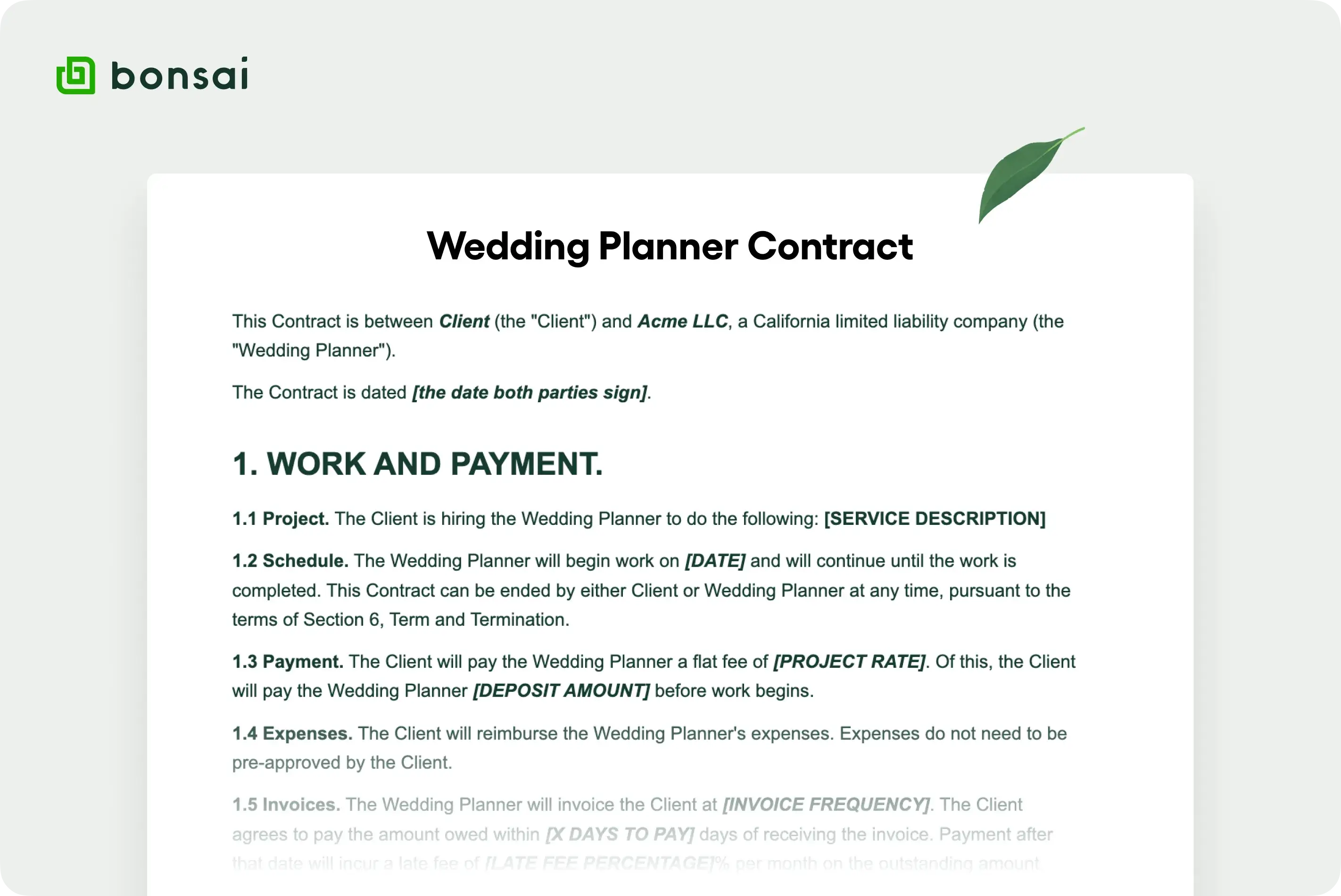
Wedding Planner Contract

Template preview
First Name
Last Name
Acme LLC.
Client
First Name
Last Name
Corporation Corp.

This Contract is between Client (the "Client") and Acme LLC, a California limited liability company (the "Wedding Planner").

The Contract is dated [the date both parties sign].

1. WORK AND PAYMENT.

1.1 Project. The Client is hiring the Wedding Planner to do the following: [SERVICE DESCRIPTION]

1.2 Schedule. The Wedding Planner will begin work on [DATE] and will continue until the work is completed. This Contract can be ended by either Client or Wedding Planner at any time, pursuant to the terms of Section 6, Term and Termination.

1.3 Payment. The Client will pay the Wedding Planner a flat fee of [PROJECT RATE]. Of this, the Client will pay the Wedding Planner [DEPOSIT AMOUNT] before work begins.

1.4 Expenses. The Client will reimburse the Wedding Planner's expenses. Expenses do not need to be pre-approved by the Client.

1.5 Invoices. The Wedding Planner will invoice the Client at [INVOICE FREQUENCY]. The Client agrees to pay the amount owed within [X DAYS TO PAY] days of receiving the invoice. Payment after that date will incur a late fee of [LATE FEE PERCENTAGE]% per month on the outstanding amount.

1.6 Support. The Wedding Planner will not provide support for any deliverable once the Client accepts it, unless otherwise agreed in writing.

2. OWNERSHIP AND LICENSES.

2.1 Client Owns All Work Product. As part of this job, the Wedding Planner is creating “work product” for the Client. To avoid confusion, work product is the finished product, as well as drafts, notes, materials, mockups, hardware, designs, inventions, patents, code, and anything else that the Wedding Planner works on—that is, conceives, creates, designs, develops, invents, works on, or reduces to practice—as part of this project, whether before the date of this Contract or after. The Wedding Planner hereby gives the Client this work product once the Client pays for it in full. This means the Wedding Planner is giving the Client all of its rights, titles, and interests in and to the work product (including intellectual property rights), and the Client will be the sole owner of it. The Client can use the work product however it wants or it can decide not to use the work product at all. The Client, for example, can modify, destroy, or sell it, as it sees fit.

2.2 Wedding Planner's Use Of Work Product. Once the Wedding Planner gives the work product to the Client, the Wedding Planner does not have any rights to it, except those that the Client explicitly gives the Wedding Planner here. The Client gives permission to use the work product as part of portfolios and websites, in galleries, and in other media, so long as it is to showcase the work and not for any other purpose. The Client does not give permission to sell or otherwise use the work product to make money or for any other commercial use. The Client is not allowed to take back this license, even after the Contract ends.

2.3 Wedding Planner's Help Securing Ownership. In the future, the Client may need the Wedding Planner's help to show that the Client owns the work product or to complete the transfer. The Wedding Planner agrees to help with that. For example, the Wedding Planner may have to sign a patent application. The Client will pay any required expenses for this. If the Client can’t find the Wedding Planner, the Wedding Planner agrees that the Client can act on the Wedding Planner's behalf to accomplish the same thing. The following language gives the Client that right: if the Client can’t find the Wedding Planner after spending reasonable effort trying to do so, the Wedding Planner hereby irrevocably designates and appoints the Client as the Wedding Planner's agent and attorney-in-fact, which appointment is coupled with an interest, to act for the Wedding Planner and on the Wedding Planner's behalf to execute, verify, and file the required documents and to take any other legal action to accomplish the purposes of paragraph 2.1 (Client Owns All Work Product).

2.4 Wedding Planner's IP That Is Not Work Product. During the course of this project, the Wedding Planner might use intellectual property that the Wedding Planner owns or has licensed from a third party, but that does not qualify as “work product.” This is called “background IP.” Possible examples of background IP are pre-existing code, type fonts, properly-licensed stock photos, and web application tools. The Wedding Planner is not giving the Client this background IP. But, as part of the Contract, the Wedding Planner is giving the Client a right to use and license (with the right to sublicense) the background IP to develop, market, sell, and support the Client’s products and services. The Client may use this background IP worldwide and free of charge, but it cannot transfer its rights to the background IP (except as allowed in Section 11.1 (Assignment)). The Client cannot sell or license the background IP separately from its products or services. The Wedding Planner cannot take back this grant, and this grant does not end when the Contract is over.

2.5 Wedding Planner's Right To Use Client IP. The Wedding Planner may need to use the Client’s intellectual property to do its job. For example, if the Client is hiring the Wedding Planner to build a website, the Wedding Planner may have to use the Client’s logo. The Client agrees to let the Wedding Planner use the Client’s intellectual property and other intellectual property that the Client controls to the extent reasonably necessary to do the Wedding Planner's job. Beyond that, the Client is not giving the Wedding Planner any intellectual property rights, unless specifically stated otherwise in this Contract.

3. COMPETITIVE ENGAGEMENTS.

The Wedding Planner won’t work for a competitor of the Client until this Contract ends. To avoid confusion, a competitor is any third party that develops, manufactures, promotes, sells, licenses, distributes, or provides products or services that are substantially similar to the Client’s products or services. A competitor is also a third party that plans to do any of those things. The one exception to this restriction is if the Wedding Planner asks for permission beforehand and the Client agrees to it in writing. If the Wedding Planner uses employees or subcontractors, the Wedding Planner must make sure they follow the obligations in this paragraph, as well.

4. NON-SOLICITATION.

Until this Contract ends, the Wedding Planner won’t: (a) encourage Client employees or service providers to stop working for the Client; (b) encourage Client customers or clients to stop doing business with the Client; or (c) hire anyone who worked for the Client over the 12-month period before the Contract ended. The one exception is if the Wedding Planner puts out a general ad and someone who happened to work for the Client responds. In that case, the Wedding Planner may hire that candidate. The Wedding Planner promises that it won’t do anything in this paragraph on behalf of itself or a third party.

5. REPRESENTATIONS.

5.1 Overview. This section contains important promises between the parties.

5.2 Authority To Sign. Each party promises to the other party that it has the authority to enter into this Contract and to perform all of its obligations under this Contract.

5.3 Wedding Planner Has Right To Give Client Work Product. The Wedding Planner promises that it owns the work product, that the Wedding Planner is able to give the work product to the Client, and that no other party will claim that it owns the work product. If the Wedding Planner uses employees or subcontractors, the Wedding Planner also promises that these employees and subcontractors have signed contracts with the Wedding Planner giving the Wedding Planner any rights that the employees or subcontractors have related to the Wedding Planner's background IP and work product.

5.4 Wedding Planner Will Comply With Laws. The Wedding Planner promises that the manner it does this job, its work product, and any background IP it uses comply with applicable U.S. and foreign laws and regulations.

5.5 Work Product Does Not Infringe. The Wedding Planner promises that its work product does not and will not infringe on someone else’s intellectual property rights, that the Wedding Planner has the right to let the Client use the background IP, and that this Contract does not and will not violate any contract that the Wedding Planner has entered into or will enter into with someone else.

5.6 Client Will Review Work. The Client promises to review the work product, to be reasonably available to the Wedding Planner if the Wedding Planner has questions regarding this project, and to provide timely feedback and decisions.

5.7 Client-Supplied Material Does Not Infringe. If the Client provides the Wedding Planner with material to incorporate into the work product, the Client promises that this material does not infringe on someone else’s intellectual property rights.

6. TERM AND TERMINATION.

This Contract is ongoing until the work is completed. Either party may end this Contract for any reason by sending an email or letter to the other party, informing the recipient that the sender is ending the Contract and that the Contract will end in 7 days. The Contract officially ends once that time has passed. The party that is ending the Contract must provide notice by taking the steps explained in Section 11.4. The Wedding Planner must immediately stop working as soon as it receives this notice, unless the notice says otherwise. The Client will pay the Wedding Planner for the work done up until when the Contract ends and will reimburse the Wedding Planner for any agreed-upon, non-cancellable expenses. The following sections don’t end even after the Contract ends: 2 (Ownership and Licenses); 3 (Competitive Engagements); 4 (Non-Solicitation); 5 (Representations); 8 (Confidential Information); 9 (Limitation of Liability); 10 (Indemnity); and 11 (General).

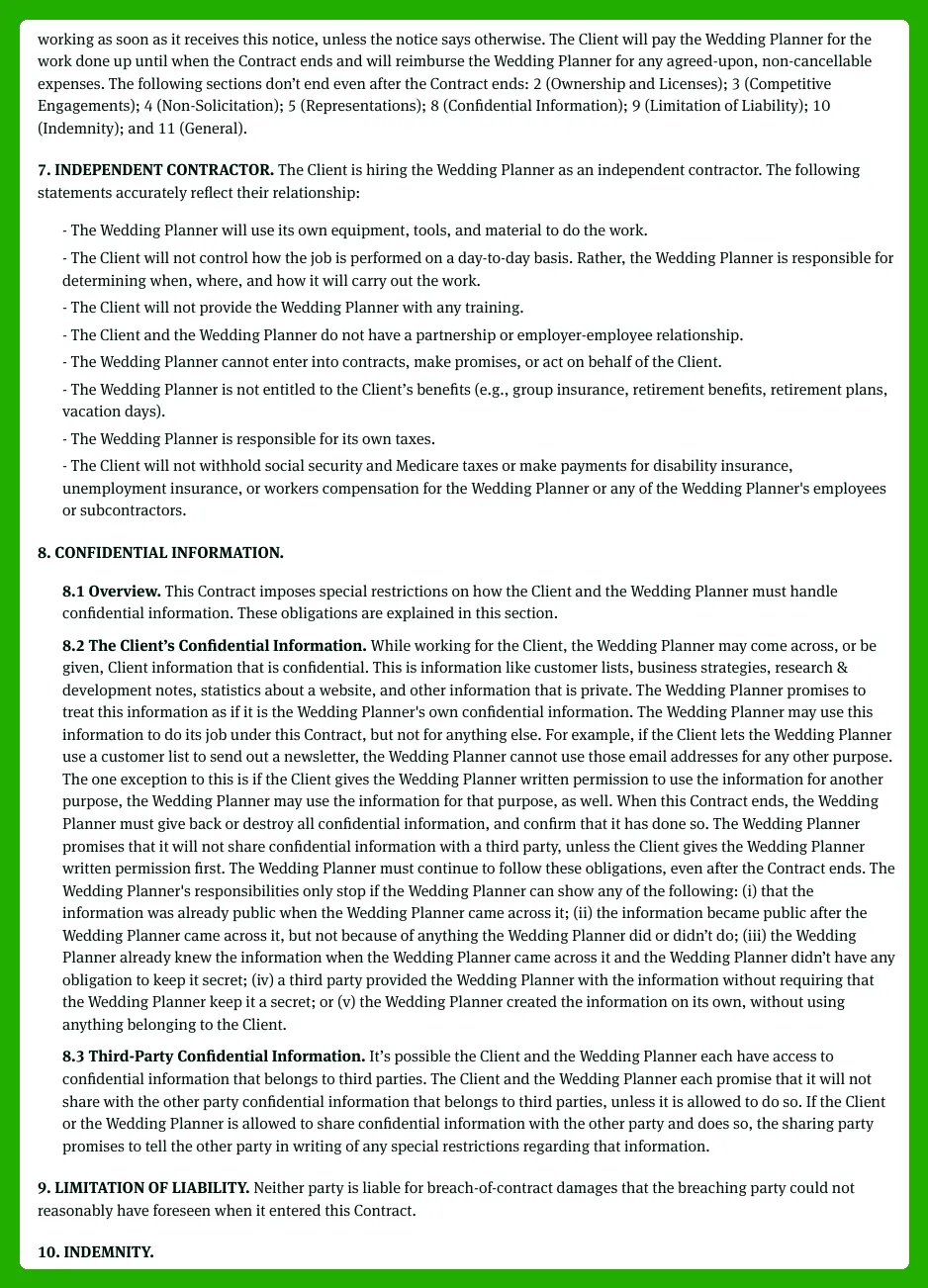
7. INDEPENDENT CONTRACTOR.

The Client is hiring the Wedding Planner as an independent contractor. The following statements accurately reflect their relationship:

  • The Wedding Planner will use its own equipment, tools, and material to do the work.
  • The Client will not control how the job is performed on a day-to-day basis. Rather, the Wedding Planner is responsible for determining when, where, and how it will carry out the work.
  • The Client will not provide the Wedding Planner with any training.
  • The Client and the Wedding Planner do not have a partnership or employer-employee relationship.
  • The Wedding Planner cannot enter into contracts, make promises, or act on behalf of the Client.
  • The Wedding Planner is not entitled to the Client’s benefits (e.g., group insurance, retirement benefits, retirement plans, vacation days).
  • The Wedding Planner is responsible for its own taxes.
  • The Client will not withhold social security and Medicare taxes or make payments for disability insurance, unemployment insurance, or workers compensation for the Wedding Planner or any of the Wedding Planner's employees or subcontractors.

8. CONFIDENTIAL INFORMATION.

8.1 Overview. This Contract imposes special restrictions on how the Client and the Wedding Planner must handle confidential information. These obligations are explained in this section.

8.2 The Client’s Confidential Information. While working for the Client, the Wedding Planner may come across, or be given, Client information that is confidential. This is information like customer lists, business strategies, research & development notes, statistics about a website, and other information that is private. The Wedding Planner promises to treat this information as if it is the Wedding Planner's own confidential information. The Wedding Planner may use this information to do its job under this Contract, but not for anything else. For example, if the Client lets the Wedding Planner use a customer list to send out a newsletter, the Wedding Planner cannot use those email addresses for any other purpose. The one exception to this is if the Client gives the Wedding Planner written permission to use the information for another purpose, the Wedding Planner may use the information for that purpose, as well. When this Contract ends, the Wedding Planner must give back or destroy all confidential information, and confirm that it has done so. The Wedding Planner promises that it will not share confidential information with a third party, unless the Client gives the Wedding Planner written permission first. The Wedding Planner must continue to follow these obligations, even after the Contract ends. The Wedding Planner's responsibilities only stop if the Wedding Planner can show any of the following: (i) that the information was already public when the Wedding Planner came across it; (ii) the information became public after the Wedding Planner came across it, but not because of anything the Wedding Planner did or didn’t do; (iii) the Wedding Planner already knew the information when the Wedding Planner came across it and the Wedding Planner didn’t have any obligation to keep it secret; (iv) a third party provided the Wedding Planner with the information without requiring that the Wedding Planner keep it a secret; or (v) the Wedding Planner created the information on its own, without using anything belonging to the Client.

8.3 Third-Party Confidential Information. It’s possible the Client and the Wedding Planner each have access to confidential information that belongs to third parties. The Client and the Wedding Planner each promise that it will not share with the other party confidential information that belongs to third parties, unless it is allowed to do so. If the Client or the Wedding Planner is allowed to share confidential information with the other party and does so, the sharing party promises to tell the other party in writing of any special restrictions regarding that information.

9. LIMITATION OF LIABILITY.

Neither party is liable for breach-of-contract damages that the breaching party could not reasonably have foreseen when it entered this Contract.

10. INDEMNITY.

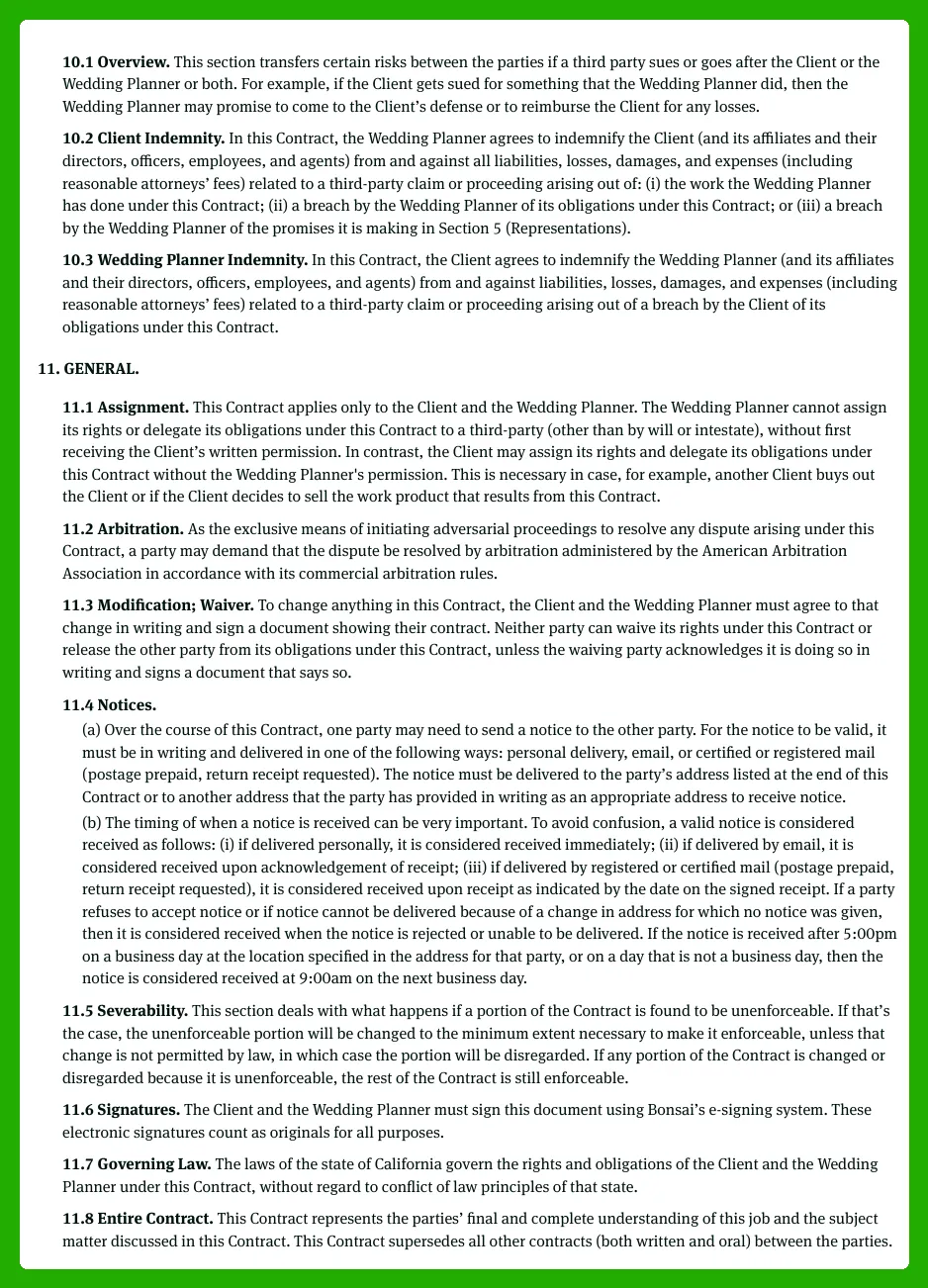
10.1 Overview. This section transfers certain risks between the parties if a third party sues or goes after the Client or the Wedding Planner or both. For example, if the Client gets sued for something that the Wedding Planner did, then the Wedding Planner may promise to come to the Client’s defense or to reimburse the Client for any losses.

10.2 Client Indemnity. In this Contract, the Wedding Planner agrees to indemnify the Client (and its affiliates and their directors, officers, employees, and agents) from and against all liabilities, losses, damages, and expenses (including reasonable attorneys’ fees) related to a third-party claim or proceeding arising out of: (i) the work the Wedding Planner has done under this Contract; (ii) a breach by the Wedding Planner of its obligations under this Contract; or (iii) a breach by the Wedding Planner of the promises it is making in Section 5 (Representations).

10.3 Wedding Planner Indemnity. In this Contract, the Client agrees to indemnify the Wedding Planner (and its affiliates and their directors, officers, employees, and agents) from and against liabilities, losses, damages, and expenses (including reasonable attorneys’ fees) related to a third-party claim or proceeding arising out of a breach by the Client of its obligations under this Contract.

11. GENERAL.

11.1 Assignment. This Contract applies only to the Client and the Wedding Planner. The Wedding Planner cannot assign its rights or delegate its obligations under this Contract to a third-party (other than by will or intestate), without first receiving the Client’s written permission. In contrast, the Client may assign its rights and delegate its obligations under this Contract without the Wedding Planner's permission. This is necessary in case, for example, another Client buys out the Client or if the Client decides to sell the work product that results from this Contract.

11.2 Arbitration. As the exclusive means of initiating adversarial proceedings to resolve any dispute arising under this Contract, a party may demand that the dispute be resolved by arbitration administered by the American Arbitration Association in accordance with its commercial arbitration rules.

11.3 Modification; Waiver. To change anything in this Contract, the Client and the Wedding Planner must agree to that change in writing and sign a document showing their contract. Neither party can waive its rights under this Contract or release the other party from its obligations under this Contract, unless the waiving party acknowledges it is doing so in writing and signs a document that says so.

11.4 Notices.

(a) Over the course of this Contract, one party may need to send a notice to the other party. For the notice to be valid, it must be in writing and delivered in one of the following ways: personal delivery, email, or certified or registered mail (postage prepaid, return receipt requested). The notice must be delivered to the party’s address listed at the end of this Contract or to another address that the party has provided in writing as an appropriate address to receive notice.

(b) The timing of when a notice is received can be very important. To avoid confusion, a valid notice is considered received as follows: (i) if delivered personally, it is considered received immediately; (ii) if delivered by email, it is considered received upon acknowledgement of receipt; (iii) if delivered by registered or certified mail (postage prepaid, return receipt requested), it is considered received upon receipt as indicated by the date on the signed receipt. If a party refuses to accept notice or if notice cannot be delivered because of a change in address for which no notice was given, then it is considered received when the notice is rejected or unable to be delivered. If the notice is received after 5:00pm on a business day at the location specified in the address for that party, or on a day that is not a business day, then the notice is considered received at 9:00am on the next business day.

11.5 Severability. This section deals with what happens if a portion of the Contract is found to be unenforceable. If that’s the case, the unenforceable portion will be changed to the minimum extent necessary to make it enforceable, unless that change is not permitted by law, in which case the portion will be disregarded. If any portion of the Contract is changed or disregarded because it is unenforceable, the rest of the Contract is still enforceable.

11.6 Signatures. The Client and the Wedding Planner must sign this document using Bonsai’s e-signing system. These electronic signatures count as originals for all purposes.

11.7 Governing Law. The laws of the state of California govern the rights and obligations of the Client and the Wedding Planner under this Contract, without regard to conflict of law principles of that state.

11.8 Entire Contract. This Contract represents the parties’ final and complete understanding of this job and the subject matter discussed in this Contract. This Contract supersedes all other contracts (both written and oral) between the parties.

THE PARTIES HERETO AGREE TO THE FOREGOING AS EVIDENCED BY THEIR SIGNATURES BELOW.

Wedding Planner
First Name
Last Name
Acme LLC.
Client
First Name
Last Name
Corporation Corp.